← all workBrand & Editorial · Systems and AI Agents
Sarv Production
Three people named the same missing system without being asked.
- Year
- Client
- Sarv Production (name changed)
- What was made
- Team research, Operations audit, Self-hosted stack, Approval workflow, Brand guideline
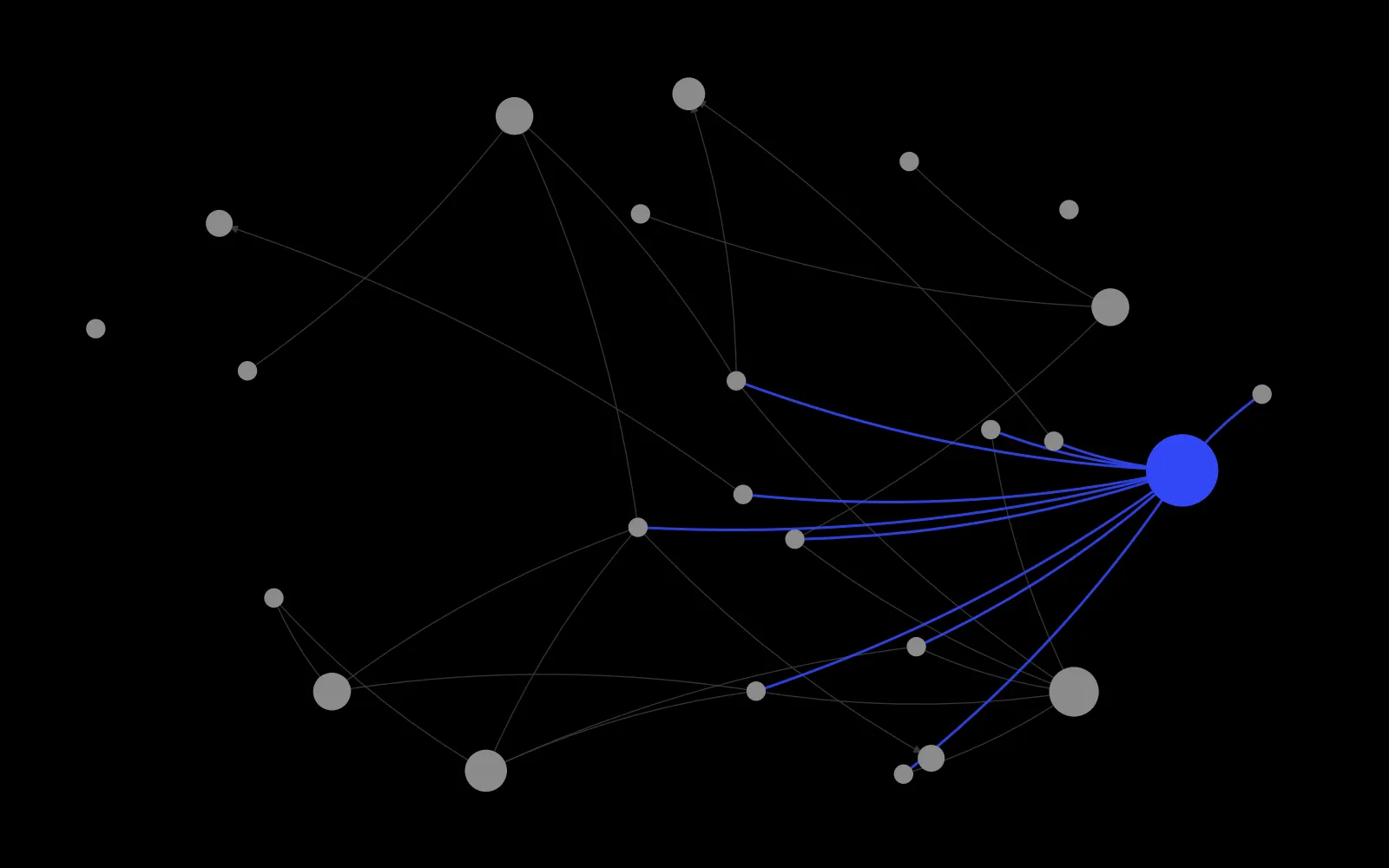
Who people go to for files. Each dot is someone on the team, each line one answer. The blue dot is the motion supervisor: 10 of 16 named him.
The work
A production agency in the Kurdistan Region: TV commercials, motion graphics and social media for local brands, 22 people across content, design, motion and social media. The founder first asked for a website. He dropped it, and the job became something else: a one-week audit of how the agency actually worked, then three months building what the audit found was missing.
The research was four interviews and one survey. I sat with the motion supervisor and one of the social media team together, then the coordinator who runs client approvals, then the head of content. The survey went out in Kurdish to the rest of the team: where their week goes, which tasks hurt, what stops their work, who they go to for files, approvals and tech help, and how they use AI. 16 of 22 answered. Two of the people who didn't were already among the interviews.
Three of the interviews landed on the same thing, unprompted and on different days. Someone on the social media team said there was no place for tasks and no place for communication. The coordinator said there was no archive, no version history and no shared place for files. The head of content said every job needed a plan that didn't exist yet. None of them had heard the others say it.
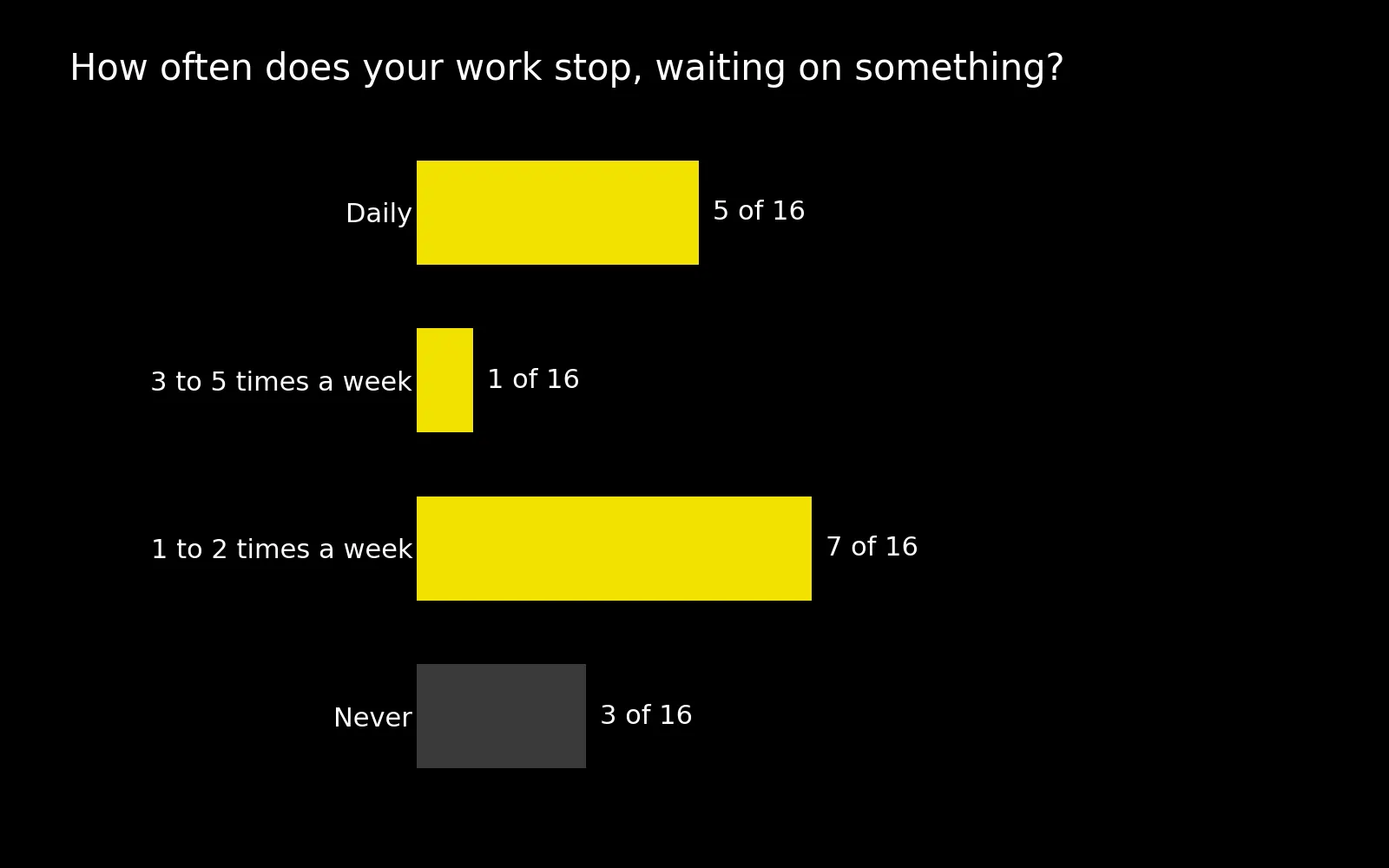
The survey put a number on it. 13 of 16 said their work stops at least once a week, five of them daily. The two biggest causes were waiting on a client's answer and waiting on an internal approval. Every post went through three gates: content and design sign-off in an internal group, then the coordinator, then the client over WhatsApp. One post sat for 13 days. Someone lost a day of edits to a power cut because the only copy was on an external drive.
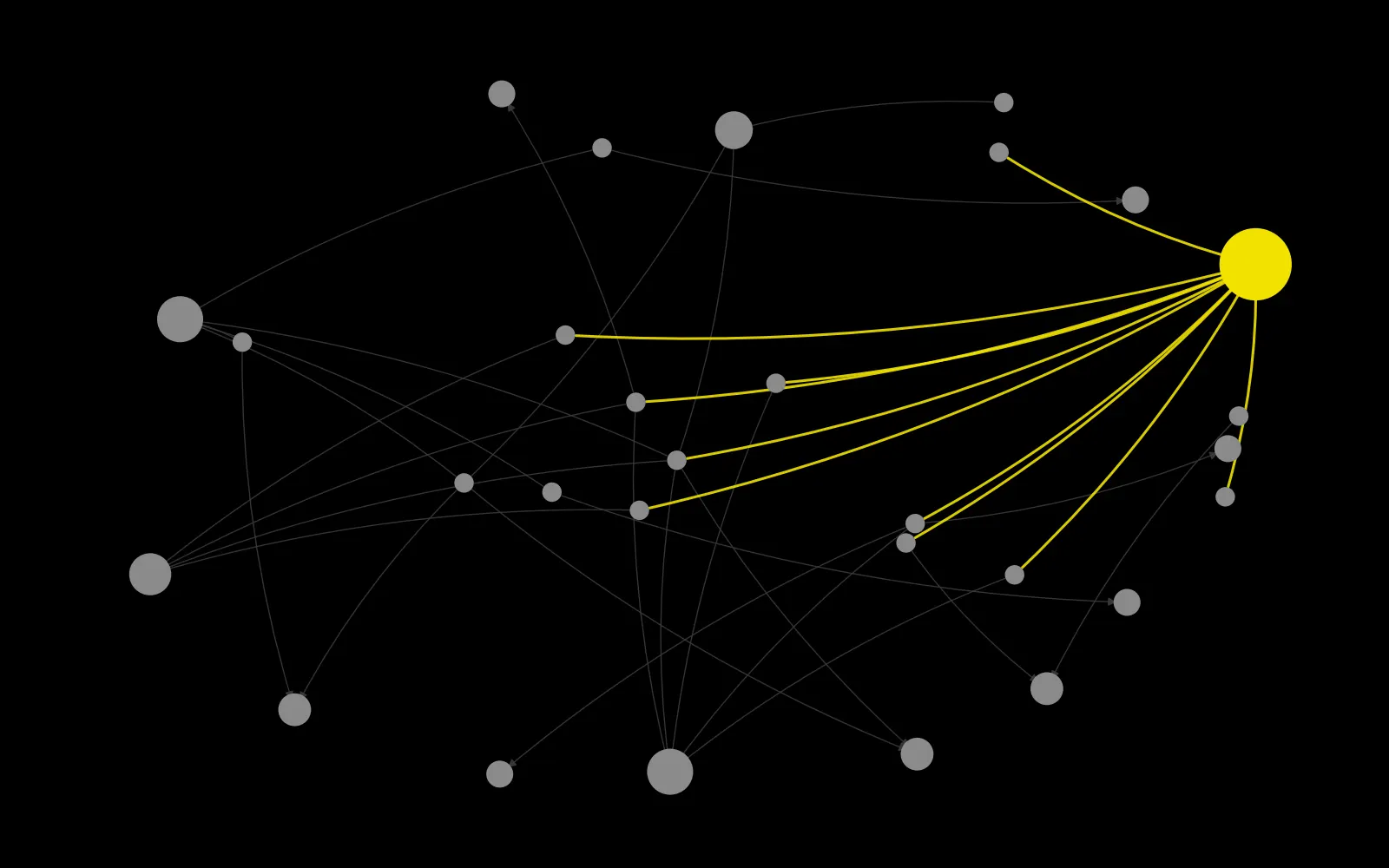
The question about who people go to was the one that mattered. Ten of 16 went to the motion supervisor for files, and ten went to him for tech help. Fifteen named him the person to ask about new tools. Ten sent their approval requests to the founder. Two people were holding up the whole agency, and the org chart didn't show it.
Two findings had nothing to do with tools. Content and social media were optimising the same client for different things, one for awareness, the other for the message, with no shared brief between them. And the agency's own clients had no brand guidelines to work from. Software doesn't fix either of those. A written brief per client does, and so does a guideline the team can actually set type with.
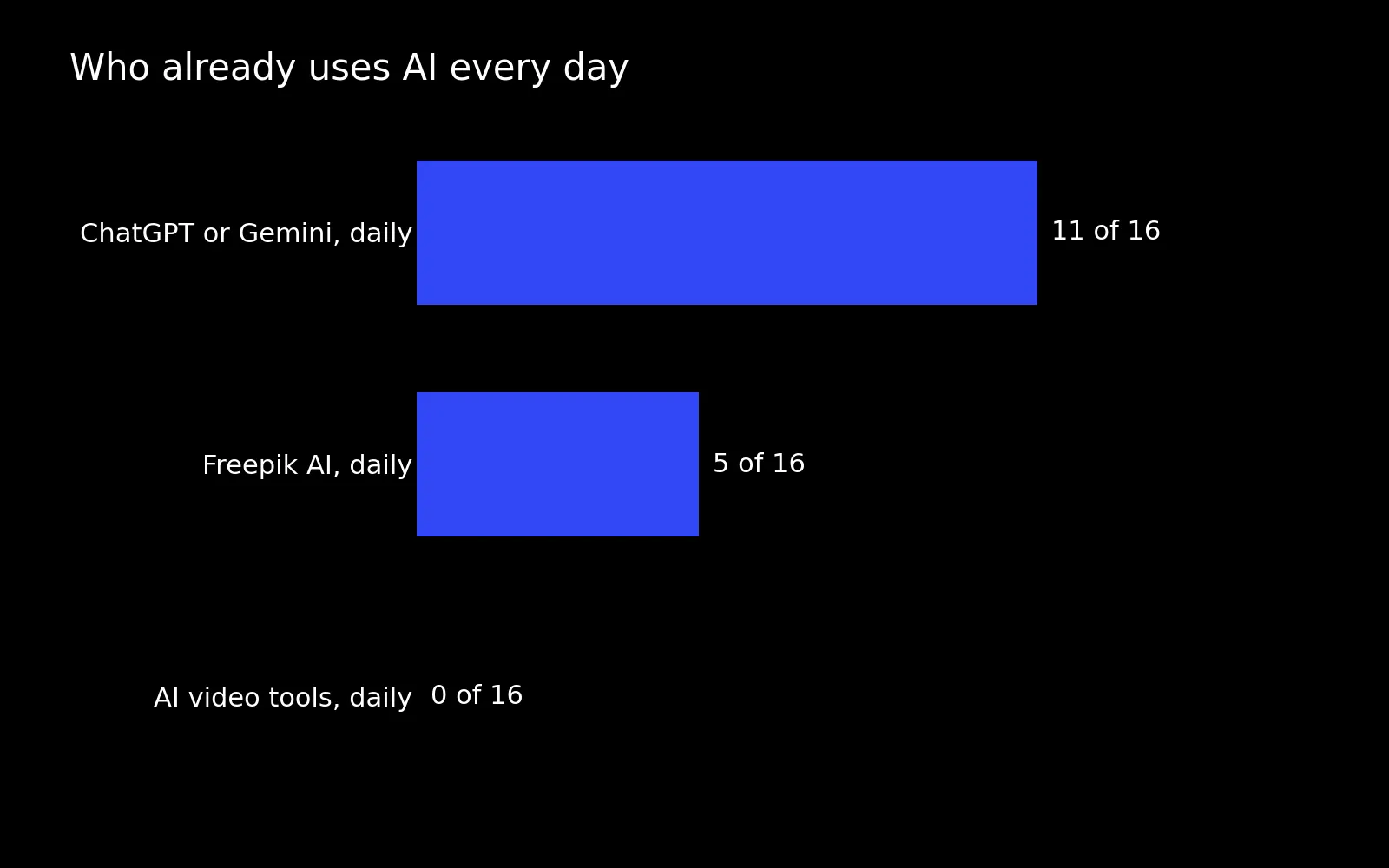
On AI the team was ahead of where the founder expected. 11 of 16 already used ChatGPT or Gemini every day, and one person saw AI as a threat to their job. The gap was narrower than adoption: nobody used AI video tools daily, and 9 of 16 said Kurdish output from AI needed fixing by hand before it was usable.
Then the system. A self-hosted stack the agency owns: chat, shared files with version history, and docs, on its own server, with a Kurdish guide for each part. 21 of 22 people were on it by 27 July. The approval chain moved inside it: a designer requests approval on the file itself, the reviewers approve or reject with a reason, the history stays on the file, and a replaced file can go back for approval without starting over. Pipeline pages show what is posting today, what is stuck at which stage, and who it is waiting on. Chat is now moving to the same server as the files, so a file and the conversation about it live in one place.
The brand side came through one of the agency's clients, a household-cleaning brand. Its first guideline had two problems you could measure. The palette had no headline pair you could read: yellow on blue measured 2.31:1. And none of the three fonts it recommended could set the campaign slogan. They had no ڕ, ڵ, ۆ or ێ, so the brand's own name would have printed as empty boxes on a billboard. I rewrote it with the agency's designer into two editions, TV production (27 pages) and social media and design (31 pages), and patched the one recommended font whose licence allows it so it covers Sorani.
What isn't in yet: a before-and-after. The same survey runs again at the end of the term. Until then the honest result is the adoption number and the approval chain living somewhere other than WhatsApp.
A note on names: the agency's name and every person's name here have been changed, and some details are held back. It's an operating business with clients of its own, and the people who answered the survey did so on the promise that only team totals would leave the room.
16/22
team surveyed
13/16
blocked at least weekly
21/22
on the new system by 27 July
Next project
Anfal
The record kept legible — no slogan, no catharsis.